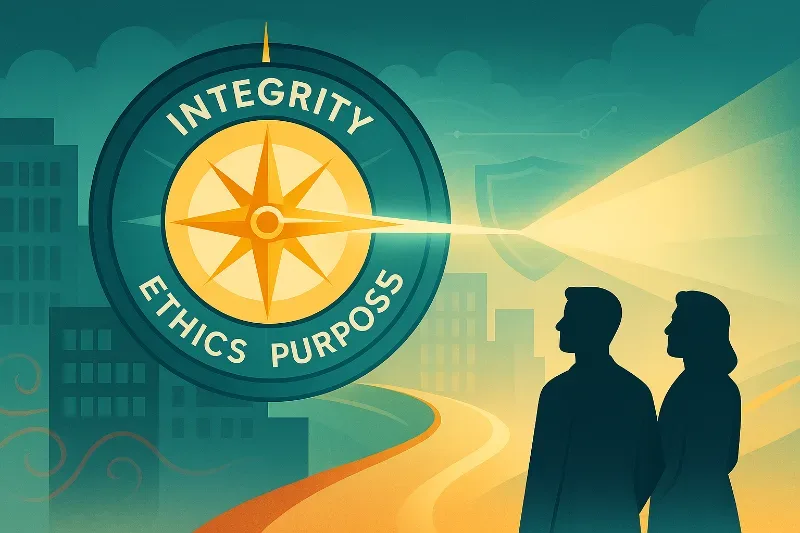
Integrity is an organisation's alignment of its behaviour with its stated purpose, values and ethical standards — a "moral compass" that guides decisions and steers the business in the direction its leaders intend.
What Does Integrity Mean for Your Business?
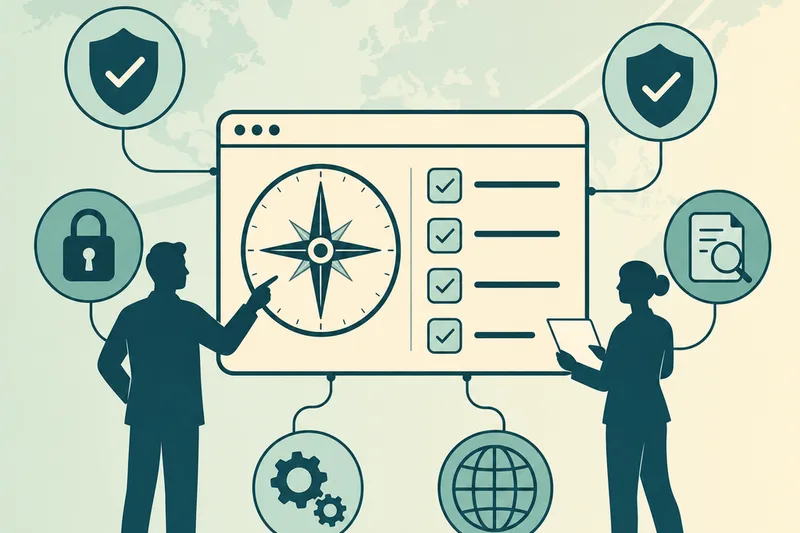
The successful launch and implementation of an integrity risk program involves many elements for businesses. For a start there needs to be up to date policies, procedures, registers and reporting tools put in place.
However, equally important, there also needs to be the engagement of the senior management and directors or business owners in order for the employees to also become engaged.
Why Should Leaders Decide the Role of Integrity?
The initial catalyst for a business to implement an integrity risk program may in many ways have been based on evolving legislative requirements, changes in societal expectations, or even a specific integrity risk event occurring. However, before a business embarks on the development of an integrity risk program, there also needs to be a clear decision by the management team and directors on the role that integrity has in the long term for their business.
What Is the "Moral Compass"?
The "moral compass"
The following quotation from a blog written by Peter Collins nicely talks about this by using the analogy of the "moral compass":
"Organisations, like people, are moral agents with a moral compass. A small deviation can have a massive effect. Long term integrity has to start with an organisation defining its sense of purpose and its moral compass. In doing so, organisations can put in place an intricate system of measures that ensure the organisation is capable of acting with full integrity" — Peter Collins, Director of the Centre for Ethical Leadership based at Ormond College at the University of Melbourne.
Perhaps all business leaders and company directors would find value in examining the importance of integrity within their business and determining in which direction their moral compass should be pointing.
How Do Leaders Set the Direction for Everyone?
It is then that an integrity risk program to steer the business in the desired direction can be developed. This will also enable the business leaders to more easily express to their whole organisation why integrity is important for everyone.
In that way, the engagement of the business leaders will be the example for everyone in the business to follow.
Please contact us for further information including the option to do a free trial:
https://www.corethix.com/contact/
Frequently Asked Questions
What is integrity in a business context?
Integrity is an organisation acting as a moral agent whose behaviour aligns with its defined sense of purpose and its "moral compass". Long term integrity starts with an organisation defining that purpose and putting in place measures that ensure it is capable of acting with full integrity.
Why does leadership engagement matter for integrity?
The engagement of senior management, directors or business owners is what enables employees to become engaged. When business leaders set the example, they become the model for everyone in the business to follow.
What does an integrity risk program involve?
An integrity risk program involves many elements, including up to date policies, procedures, registers and reporting tools, together with the active engagement of leadership so that the whole organisation understands why integrity is important for everyone.
What might prompt a business to develop an integrity risk program?
The initial catalyst may be evolving legislative requirements, changes in societal expectations, or a specific integrity risk event occurring. Before developing a program, leaders should make a clear decision on the long term role integrity has in their business.