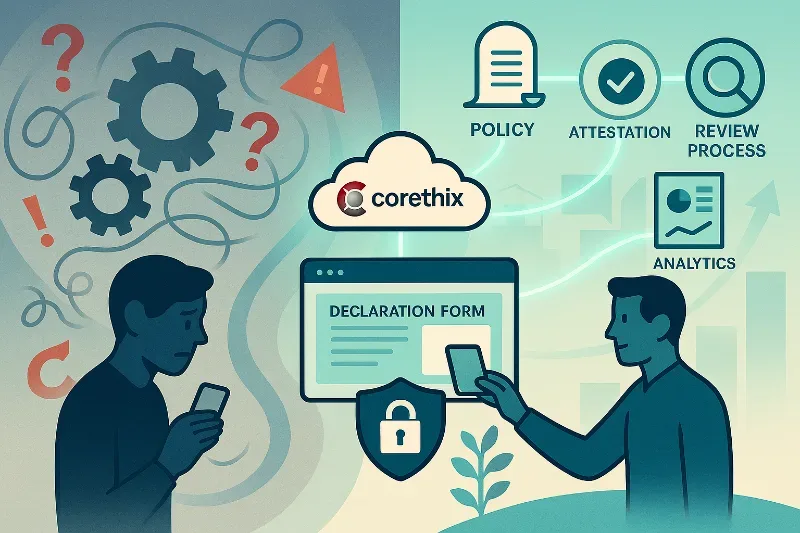
A conflict of interest is when personal interests, enticements or relationships may affect professional duties, causing potential bias in decision-making. Ensuring these are declared and reviewed protects an organisation from legal, financial and reputational damage.
What Is a Conflict of Interest?
A conflict of interest is when personal interests, enticements or relationships may affect professional duties causing potential bias in decision-making.
These conflicts can occur at any level of the business including employees, contractor, director or board member and can potentially cause legal, financial and reputational damage to an organisation.
Why Do Conflicts of Interest Need to Be Declared?
To ensure transparency, integrity, and ethical standards, organisations need to ensure that their employees, contractors and suppliers identify and declare any conflicts of interest and that these declarations are evaluated, assessed and actioned by the appropriate people in the business.
The requirement that conflicts of interest are declared should be defined in an organisation's Code of Conduct Policy or even a separate Conflicts of Interest policy. This can then be communicated to all staff who should be required to attest that they have read and understood the policy and understand their responsibilities to declare any potential or actual conflicts of interest.
Requesting employees, contractors and suppliers to make a declaration if they have a conflict of interest to declare is not as effective as requiring them to formally attest whether or not they have a potential or real conflict of interest to declare, and if so to make that declaration at that time.

What Are the Best Practices for Declaring and Reviewing Conflicts of Interest?
The team at Corethix understand the importance of ensuring any perceived or actual conflicts of interest are declared and investigated promptly and have designed our platform to include the following best practices.
Clearly define what is a conflict of interest and why they are important to declare
It is critically important to clearly define what is a conflict of interest in one of your organisations policies, for example Code of Conduct. This informs all employees, contractors, and suppliers about the nature of a conflict of interest and why it is important to declare to them to the organisation.
Enforce policy and conflict of interest attestation
Ensure that all employees, contractors and suppliers are required to attest that they have read and understood the policy that defines the importance to declare conflicts of interest. The next step is to require each employee, contractor or supplier to attest whether or not they do have a conflict of interest to declare. This can be simply requiring them to answering a yes/no question about whether or not they have a conflict of interest to declare. The response to this question is then recorded and date stamped for future analysis.
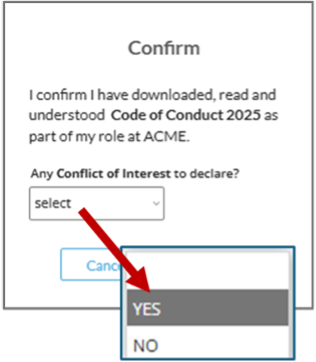
Declaring conflicts of interest
If an employee or contractor does attest that they have a conflict of interest to declare, then they should immediately be required to log the declaration providing sufficient details for an appropriate person(s) in the organisation to investigate and respond.
Review and process declarations in a timely manner
Once a conflict of interest is declared, it needs to be promptly reviewed and actioned by the assigned reviewer(s).
The reviewer(s) are notified by email that a new declaration has been lodged and are requested to log into the Corethix platform to assess and process the declaration. This may require requesting more information from the initiator of the declaration, asking another person to join the review process or escalating to a more senior person in the organisation. Once the assessment process is completed a decision is made on appropriate actions to be taken (if any) and the declaration is noted as completed.
All actions and communication in the review process are recorded for future investigation and analysis.
Proactively review declarations of conflict of interest and act when needed
Administrators need to proactively monitor all conflicts of interest that have been declared by reviewing the dashboard for both policies and declarations. This is important to ensure that any declared conflicts of interest have been reviewed promptly and appropriate action has been taken. The details, review progress and outcome for all conflict of interest declarations are displayed in the declarations dashboard and there is a data table showing the complete historical audit trail of all case notes and agreed actions for each declaration.
A separate policies dashboard shows in detail whether or not any employee or contractor has attested that they had a conflict of interest to declare after acknowledging that they had read and understood the policy which defines a conflict of interest. This is very important as it records each employee and contractors attestation response which can be examined if any conflicts of interest arise in the future after not being declared.
Please contact us for further information including the option to do a free trial.
Frequently Asked Questions
What is a conflict of interest?
A conflict of interest is when personal interests, enticements or relationships may affect professional duties, causing potential bias in decision-making. It can occur at any level of the business, including employees, contractors, directors or board members.
Why is it important to declare conflicts of interest?
Undeclared conflicts of interest can cause legal, financial and reputational damage to an organisation. Declaring and reviewing them ensures transparency, integrity and ethical standards, and allows the appropriate people in the business to evaluate, assess and action each declaration.
How should conflicts of interest be declared?
The requirement to declare should be defined in a Code of Conduct or separate Conflicts of Interest policy. Rather than only asking people to declare if they have a conflict, best practice is to require each person to formally attest whether or not they have a conflict of interest, and to log the declaration with sufficient detail if they do.
How are declared conflicts of interest reviewed?
Once a conflict is declared, it is promptly reviewed and actioned by assigned reviewers who are notified by email. The review may involve requesting more information, inviting others to join, or escalating to a more senior person. A decision on appropriate actions is made and all actions and communication are recorded for future investigation and analysis.
How can organisations proactively monitor conflicts of interest?
Administrators can use a declarations dashboard showing the details, review progress and outcome of every declaration, together with a policies dashboard recording whether each person attested that they had a conflict to declare. This provides a complete historical audit trail that can be examined if conflicts arise in the future.